Air circulators and fans serve different purposes in home cooling: fans provide direct, personal cooling through a wind chill effect, while air circulators create whole-room air movement to equalize temperatures and enhance HVAC efficiency. An air circulator is engineered to create a powerful, focused column of air that travels farther and mixes air more effectively throughout an entire room, making it a smarter choice for whole-room comfort and energy savings.
Think of this as the ultimate showdown: the familiar, direct blast of a standard fan versus the whole-room-comfort promise of an air circulator. We’re going to break down exactly what each device does, how it works, and which one is the right champion for your space.
 For shop curated home cooling on this site.
The Classic Fan: A Master of Personal Space
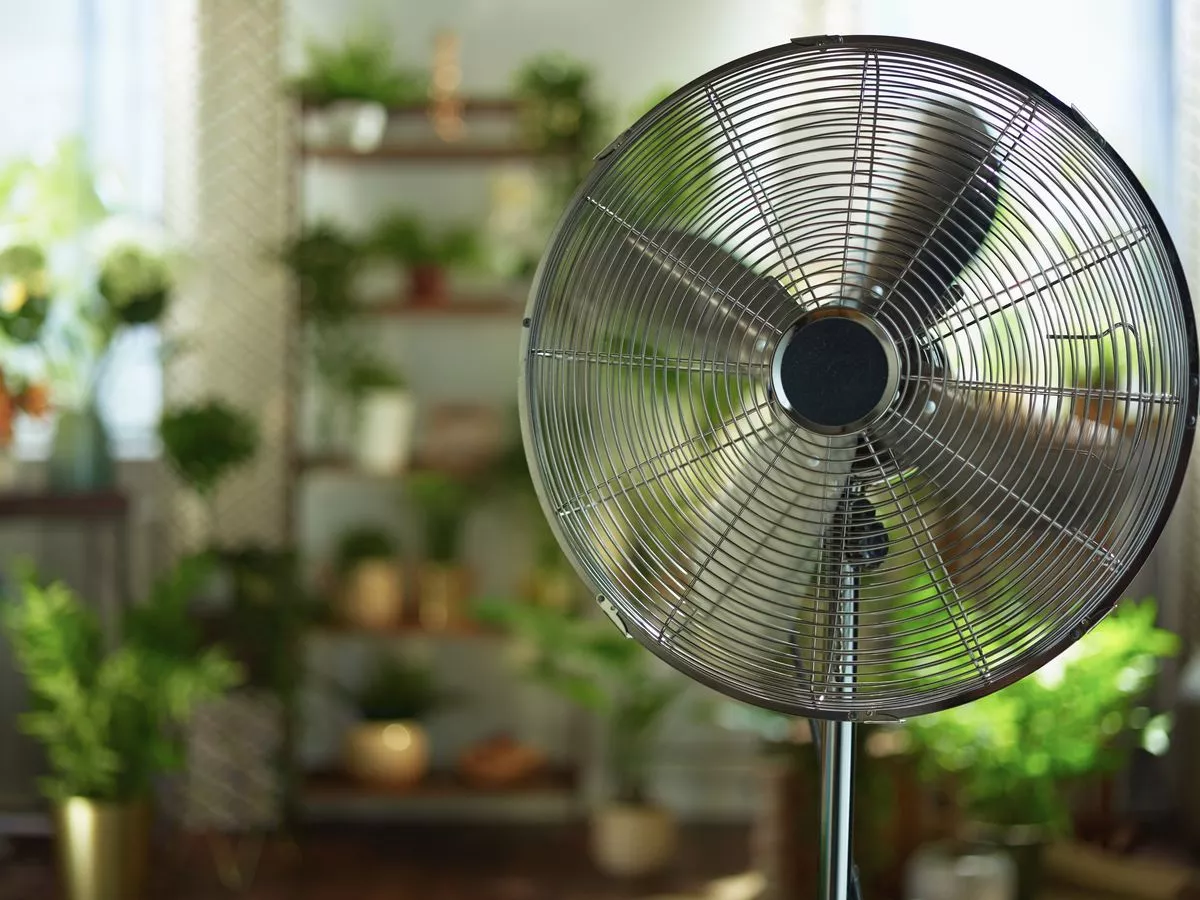
Before we dive into the comparison, let’s get back to basics. A standard fan, whether it’s a pedestal, box, or tower fan, operates on a very simple principle: the wind chill effect.
I remember my first college dorm room—a tiny, stuffy box with one window. My little box fan was my best friend. It didn’t actually lower the room’s temperature, but by blowing air directly on me, it helped evaporate sweat from my skin, which made me feel cooler.
How Traditional Fans Work
A fan uses angled blades to chop through the air and push it forward in a wide, dispersed pattern. This creates a breeze.
- Direct Cooling: The goal is to hit you with that breeze. If you’re not in its direct path, you won’t feel much.
- Limited Range: The airflow is strong at first but weakens significantly over a short distance. This is why you have to sit right in front of it on a hot day.
- Air Displacement: It moves air, but it doesn’t create a cohesive, room-wide pattern of circulation.
Essentially, a fan is a personal cooling device. It’s a fantastic solution for cooling one or two people in a specific spot, but it struggles to make an entire room feel more comfortable.
The Air Circulator: The Whole-Room Conductor
Now, let’s talk about the challenger: the air circulator. On the surface, it looks a lot like a fan. It has blades, a motor, and a grill. But its design and purpose are fundamentally different.
“A standard fan is like shouting to one person across a room, while an air circulator is like starting a conversation that everyone in the room can join. It’s about creating a unified environment, not a targeted blast.” – John Anderson, HVAC Engineering Consultant.
An air circulator isn’t designed to blow air at you. Instead, it’s engineered to create a powerful, focused column of air. The magic happens when you aim this column at a wall or the ceiling.
The Science of Air Circulation
Bảng trống.- Vortex Creation: The circulator creates a tight, spiraling column of air (a vortex) that travels much farther than the wide breeze from a fan.
- The Bounce Effect: This column of air hits a surface (like the opposite wall) and “bounces” off, continuing its journey.
- Whole-Room Movement: As the air travels, it pulls the surrounding air along with it, creating a continuous, gentle current throughout the entire room. This process mixes the cool air near the floor with the warmer air near the ceiling, resulting in a more uniform and comfortable room temperature.
This constant air movement eliminates stagnant hot spots and makes the whole space feel fresher and cooler, even if the thermostat reading hasn’t changed.
Head-to-Head: Do Air Circulators Work Better Than Fans?
So, let’s put them side-by-side. The answer to “do air circulators work better than fans” truly depends on your specific needs and the environment you’re trying to cool.
| Feature | Standard Fan | Air Circulator |
|---|---|---|
| Primary Goal | Direct, personal cooling (Wind Chill) | Whole-room temperature equalization |
| Airflow Pattern | Wide, dispersed, short-range breeze | Focused, long-range column (Vortex) |
| Effective Range | A few feet in a direct line | The entire room |
| Best Use Case | Cooling a person at a desk or in bed | Making a large living room or bedroom feel comfortable |
| Energy Efficiency | Generally low power consumption | Can boost A/C efficiency, saving energy overall |
| Year-Round Use | Primarily for summer/hot weather | Can be used in winter to circulate heat |
| Price | Generally more affordable | Typically a higher initial investment |
When a Standard Fan is Your Best Bet
Don’t count the classic fan out! It’s still the perfect choice in many situations:
- For Your Desk: If you just need a personal breeze while you work.
- Bedroom Bliss: For direct cooling while you sleep, especially if you enjoy the feeling of a breeze.
- On a Tight Budget: Fans are almost always the more cost-effective option upfront.
- Small, Confined Spaces: In a tiny room or RV, a fan’s direct airflow might be all you need.
When an Air Circulator is Worth the Upgrade
An air circulator truly shines and justifies its price tag in these scenarios:
- Large or Open-Plan Rooms: It’s the only way to effectively move air across a large living room or great room.
- Boosting Your A/C: By circulating the cool air from your air conditioner, you can raise the thermostat by a few degrees and save a significant amount on your energy bill. The A/C doesn’t have to work as hard to cool the entire space.
- Rooms with High Ceilings: It’s a pro at bringing down the hot air that gets trapped up high.
- Year-Round Comfort: In winter, you can use it to push warm air from your heating system (which also rises) back down to where you are, making your heater more efficient.
Pro Tips for Getting the Most Out of Your Device
Whether you choose a fan or a circulator, proper placement is everything.
For a Fan:
- Create a Cross-Breeze: Place a fan facing out one window and open another window on the opposite side of the room to pull cool, fresh air through the space.
- The “Ice Trick”: For a temporary boost, place a bowl of ice water in front of your fan. The breeze will pick up the cool moisture.
For an Air Circulator:
- Aim High: Never point an air circulator directly at yourself. Aim it towards a far corner of the room, midway up the wall, or towards the center of the ceiling.
- Experiment: Every room is different. Try a few different angles to see what creates the most comfortable, imperceptible airflow. The goal is to feel the effect (a comfortable room), not the breeze itself.
Frequently Asked Questions (FAQ)
Can an air circulator replace my air conditioner?
No, an air circulator does not cool the air itself. It works by moving air to make you feel more comfortable and to help your A/C or heating system work more efficiently.
Are air circulators louder than fans?
It varies by model, but on lower settings, high-quality air circulators are often whisper-quiet. On their highest settings, they can be loud because they move a massive amount of air, often measured in Cubic Feet per Minute (CFM).
Can I use an air circulator in the winter?
Absolutely! This is one of their biggest advantages. By circulating the warm air that pools at the ceiling, an air circulator can help keep your living space warmer and reduce heating costs.
What’s the best way to clean an air circulator?
Most models have a removable grill. Always unplug the unit first, then remove the grill according to the manufacturer’s instructions. You can then wipe down the blades and the inside with a damp cloth to prevent dust buildup.
Do air circulators work better than fans for sleeping?
This is a matter of personal preference. If you love the feeling of a direct breeze, a traditional fan might be better. If you find a direct breeze disruptive or drying, the gentle, indirect whole-room airflow of a circulator will provide a more comfortable sleeping environment.
The Final Verdict
So, do air circulators work better than fans? The definitive answer is that they work smarter, not necessarily harder. A fan is an excellent tool for personal cooling, offering immediate, direct relief. An air circulator is a more sophisticated solution for whole-room comfort, enhancing the effectiveness of your existing heating and cooling systems and eliminating hot and cold spots.
The right choice comes down to your space, your budget, and your ultimate goal. Are you looking for a quick, personal cooldown, or are you trying to create a more comfortable and energy-efficient environment for the entire room? Once you answer that question, you’ll know exactly which cooling champion belongs in your corner.
Frequently Asked Questions
Can an air circulator replace my air conditioner?
No, an air circulator does not cool the air itself. It works by moving air to make you feel more comfortable and to help your A/C or heating system work more efficiently, enhancing the effectiveness of already cooled air.
Are air circulators louder than fans?
It varies by model, but on lower settings, high-quality air circulators are often whisper-quiet. On their highest settings, they can be loud because they move a massive amount of air, often measured in Cubic Feet per Minute (CFM).
Can I use an air circulator in the winter?
Absolutely! This is one of their biggest advantages. By circulating the warm air that pools at the ceiling, an air circulator can help keep your living space warmer and reduce heating costs, making your heater more efficient.
What's the best way to clean an air circulator?
Most models have a removable grill. Always unplug the unit first, then remove the grill according to the manufacturer's instructions. You can then wipe down the blades and the inside with a damp cloth to prevent dust buildup and maintain efficiency.
Do air circulators work better than fans for sleeping?
This is a matter of personal preference. If you love the feeling of a direct breeze, a traditional fan might be better. If you find a direct breeze disruptive or drying, the gentle, indirect whole-room airflow of a circulator will provide a more comfortable sleeping environment.
Get our weekly buyer guide
Practical specs, not advice. Unsubscribe anytime.
This comparison really helped me understand the difference. I used to think all fans were the same, but the explanation of how air circulators create a focused column of air makes so much sense. We put one in our bedroom, and it’s amazing how much better the air feels. No more hot spots!
I was always a fan of traditional fans for direct cooling, but after reading about air circulators, I decided to try one for our living room. It’s made such a difference! The whole room feels cooler and less stuffy, even on hot days. My AC doesn’t have to work as hard, which is a huge bonus for our energy bill.
I got an air circulator hoping it would totally replace my old box fan, but it’s not quite the same. While it does a good job of moving air around the room, I still miss that direct wind chill effect when I’m really hot. It’s good for general comfort, but for personal cooling, I still prefer my fan right next to me.
We have a large open-concept kitchen and dining area that always felt warm, even with the ceiling fan on high. I picked up an air circulator based on the idea of whole-room air movement, and it really does help. It’s not a direct blast like a fan, but the overall temperature feels much more even now. Wish I’d gotten one sooner.