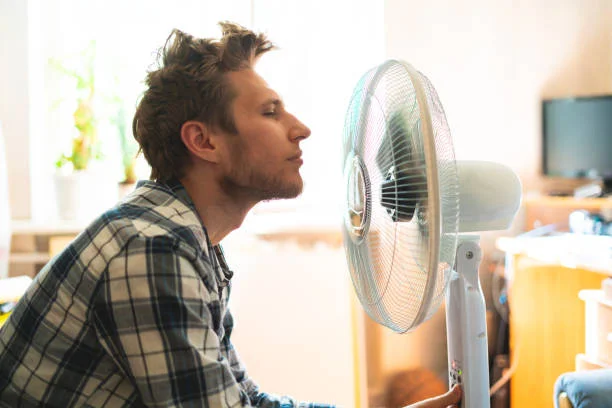
On a sweltering day, a fan can significantly help with the feeling of humidity by accelerating sweat evaporation from your skin, making you feel cooler and less sticky, even though it does not remove moisture from the air or lower the room’s actual humidity level. This process, known as the wind chill effect, directly combats the discomfort caused by high humidity by increasing air circulation around your body.
The Science of Sweat: How Fans Really Work
To understand how a fan tackles humidity’s effects, we need to talk about your body’s built-in air conditioning system: sweat. It’s a simple, brilliant process. When you get hot, your body releases sweat. As that moisture evaporates off your skin, it takes heat with it, cooling you down.
So, where does the fan come in?
Humidity is the enemy of evaporation. When the air is already saturated with water vapor, there’s nowhere for your sweat to go. It just sits on your skin, leaving you feeling sticky and hot. A fan directly combats this problem by increasing air circulation.
Think of it like blowing on a hot spoonful of soup. You’re not making the soup itself colder, but you’re speeding up the process of heat escaping from its surface. A fan does the exact same thing to your skin. It moves the layer of humid, stagnant air directly surrounding your body and replaces it with drier, moving air, which dramatically speeds up the evaporation of sweat. This process is often called the wind chill effect, and it’s the secret behind why a fan feels so good on a humid day.
“A fan is not an air conditioner; it cools people, not rooms. Its primary function in a humid environment is to accelerate moisture evaporation from the skin, which is the body’s natural and most effective cooling mechanism.” – John Anderson, HVAC Engineering Specialist For complete home cooling library on this site.
In short, a fan doesn’t lower the room’s humidity level, but it significantly lowers your personal feeling of heat and stickiness by making your body’s cooling system work overtime.
Maximizing Your Fan’s Power in a Humid Room
Now that we know why a fan helps, how can we make it as effective as possible? It’s not just about turning it on and hoping for the best. Strategic use can make a world of difference.
Placement is Everything
Where you put your fan is crucial for battling stuffy, humid air. The goal is to create cross-ventilation, a steady flow of air moving through the space.
- Open the Windows (At the Right Time): If the air outside is cooler and less humid than inside (typically at night or early in the morning), open windows on opposite sides of the room.
- Position Your Fan: Place a box fan or pedestal fan facing out of one window. This will push the hot, humid indoor air outside.
- Create a Draft: The vacuum created will pull the cooler, drier air in through the other open window, creating a refreshing and continuous breeze.
If you can’t open windows, simply ensuring the fan is oscillating and covering the main living area will prevent pockets of stagnant, muggy air from forming.
Team Up with Other Appliances
Your fan is a team player. It works even better when paired with other household appliances.
- With an Air Conditioner: Running a fan along with your AC allows you to raise the thermostat by a few degrees without sacrificing comfort. The fan helps distribute the cool, conditioned air more evenly, reducing the AC’s workload and saving on your energy efficiency. A ceiling fan is especially great for this.
- With a Dehumidifier: This is the ultimate one-two punch against humidity. The dehumidifier will actively remove moisture from the air, while the fan will circulate the newly dried air and provide that immediate evaporative cooling effect.
The Old-School “Ice Trick”
For a low-tech boost, place a shallow bowl or pan of ice and cold water in front of a fan. The fan will blow over the ice, creating a chilled, misty breeze that can provide temporary, targeted relief in a particularly stuffy spot. It’s not going to cool the whole room, but it feels fantastic if you’re sitting right in its path.
How to Choose the Right Fan for Humid Climates
Not all fans are created equal when it comes to moving heavy, humid air. When shopping for a new cooling solution, here are the key factors to consider. This is where understanding some basic specs can make a huge difference.
- Airflow (CFM): This is the most important metric. CFM (Cubic Feet per Minute) measures how much air a fan moves. For humid environments, look for a higher CFM rating. A fan with a high CFM can create a stronger breeze, which is more effective at cutting through thick air and promoting evaporation.
- Size and Type: The right type of fan depends on your space.
- Tower Fans: Great for bedrooms or living rooms. They have a small footprint, are generally quiet, and their vertical design helps circulate air at different levels.
- Pedestal Fans: These are the classic workhorses. Their adjustable height and powerful heads are perfect for directing strong airflow right where you need it.
- Ceiling Fans: An excellent choice for whole-room circulation. Make sure your ceiling fan is spinning counter-clockwise in the summer to push air down and create a cooling downdraft.
- Oscillation: The ability to turn from side to side is essential for circulating air throughout a room rather than just in one spot. This prevents air from becoming stagnant.
- Energy Efficiency: Look for models with an Energy Star rating to keep your electricity bills in check, especially if you plan on running the fan for long periods.
Fan Type Comparison for Humid Conditions
| Fan Type | Best For | Pros | Cons |
|---|---|---|---|
| Ceiling Fan | Overall room circulation, large spaces | Excellent air distribution, energy-efficient when paired with AC | Installation required, not portable |
| Pedestal Fan | Targeted, powerful cooling | High CFM, adjustable height and direction | Can be noisy, takes up floor space |
| Tower Fan | Bedrooms, offices, modern spaces | Quiet operation, small footprint, extra features (timers, remotes) | Generally lower CFM than pedestal fans |
| Box Fan | Window ventilation, budget-friendly | Inexpensive, great for creating cross-breezes | Basic features, can be loud |
Choosing the right fan is a key step. If you need help deciding, check out our in-depth [guide to the best fans for any room].
Frequently Asked Questions (FAQ)
Can a fan actually make a room more humid?
No, a fan cannot create or add moisture to the air. It only circulates the existing air. The only exception is if you are actively using it to blow over a source of water, like the “ice trick” mentioned earlier, but this effect is minimal and localized.
Is it better to use a fan or a dehumidifier for humidity?
They serve different purposes. A dehumidifier physically removes moisture from the air, lowering the overall humidity level. A fan makes you feel cooler and less sticky by improving air circulation and evaporation. For ultimate comfort in very humid climates, using both is the ideal solution.
Does running a fan 24/7 help with humidity?
Running a fan constantly will keep the air moving and prevent it from feeling stagnant and stuffy. However, since fans cool people, not rooms, it’s most energy-efficient to run them only when you are in the room. For more tips, you can [read about fan maintenance and energy saving].
What’s the best type of fan for a humid bathroom?
An exhaust fan is non-negotiable for a bathroom. It’s specifically designed to vent moist air directly outside, preventing mold and mildew growth. A small circulating fan can also be used to help dry surfaces after a shower, but it should be used in conjunction with a proper exhaust fan.
So, can a fan help with humidity and prevent mold?
A fan can indirectly help prevent mold by promoting air circulation and helping wet surfaces (like in a bathroom or a damp basement) dry faster. Stagnant, moist air is a breeding ground for mold. However, a fan is not a substitute for fixing leaks or using a dehumidifier in a chronically damp area.
The Final Verdict
So, let’s circle back to our original question: can a fan help with humidity? The definitive answer is yes, it absolutely can—just not in the way you might think. It won’t lower the number on a hygrometer, but it will win the battle against the feeling of humidity.
By promoting powerful air circulation and supercharging your body’s natural ability to cool itself through evaporation, a well-chosen and strategically placed fan is one of the most effective and energy-efficient tools you have. It turns an oppressive, sticky room into a comfortable, breezy oasis. So the next time you feel that muggy air closing in, turn on your fan with confidence, knowing you’re not just moving hot air around—you’re making science work for you.
Frequently Asked Questions
Can a fan actually make a room more humid?
No, a fan cannot create or add moisture to the air; it only circulates existing air. The only minor exception is if it blows over a direct water source, like ice, but this effect is minimal and localized to the immediate area.
Is it better to use a fan or a dehumidifier for humidity?
A dehumidifier actively removes moisture from the air, lowering the overall humidity level, while a fan makes you feel cooler by improving air circulation and accelerating sweat evaporation. For optimal comfort in very humid conditions, using both appliances together is the ideal solution.
Does running a fan 24/7 help with humidity?
Running a fan constantly keeps air moving, preventing stagnation and stuffiness. However, since fans cool people, not rooms, it is most energy-efficient to operate them only when you are present in the room to benefit from the evaporative cooling effect.
What's the best type of fan for a humid bathroom?
An exhaust fan is essential for a humid bathroom as it vents moist air directly outside, preventing mold and mildew. A small circulating fan can also assist in drying surfaces after a shower, but it should always complement a proper exhaust system.
Can a fan help with humidity and prevent mold?
A fan can indirectly help prevent mold by promoting air circulation and speeding up the drying of wet surfaces, which discourages mold growth in stagnant, moist areas. However, a fan is not a substitute for repairing leaks or using a dehumidifier in chronically damp environments.
Get our weekly buyer guide
Practical specs, not advice. Unsubscribe anytime.
I always wondered if my fan was actually doing anything for the humidity, or if it was just moving hot air around. This explanation about sweat evaporation and the wind chill effect totally makes sense! I’ve been positioning my fan better now, and it really does make a difference in how sticky I feel on those super humid days. Definitely a game-changer for my comfort.
I appreciate the info on how fans help with the feeling of humidity, especially the part about sweat evaporation. However, I was hoping for more specific fan recommendations for different room sizes or types. My current oscillating tower fan seems to help a little, but I still feel pretty clammy on the most humid afternoons. It’s good to know the theory, but practical advice on fan models would have been a bonus.
I’ve been using a box fan in my bedroom for years, thinking it was helping with the overall room humidity. While it doesn’t remove moisture, understanding how it helps with the feeling of humidity by increasing air circulation around my body has been really helpful. I’m still looking into a dehumidifier for the really bad days, but for everyday discomfort, my fan is doing a much better job now that I understand the science behind it.
This article really broke down the science of sweat and how fans actually work to make you feel cooler. I used to think my fan was useless when it was really humid, but now I understand it’s all about accelerating that evaporation. I’ve noticed a significant improvement in my comfort level since I started aiming my fan directly at myself instead of just generally into the room. No more sticky nights!